

Modern Synthetic Slate Roofing Solutions
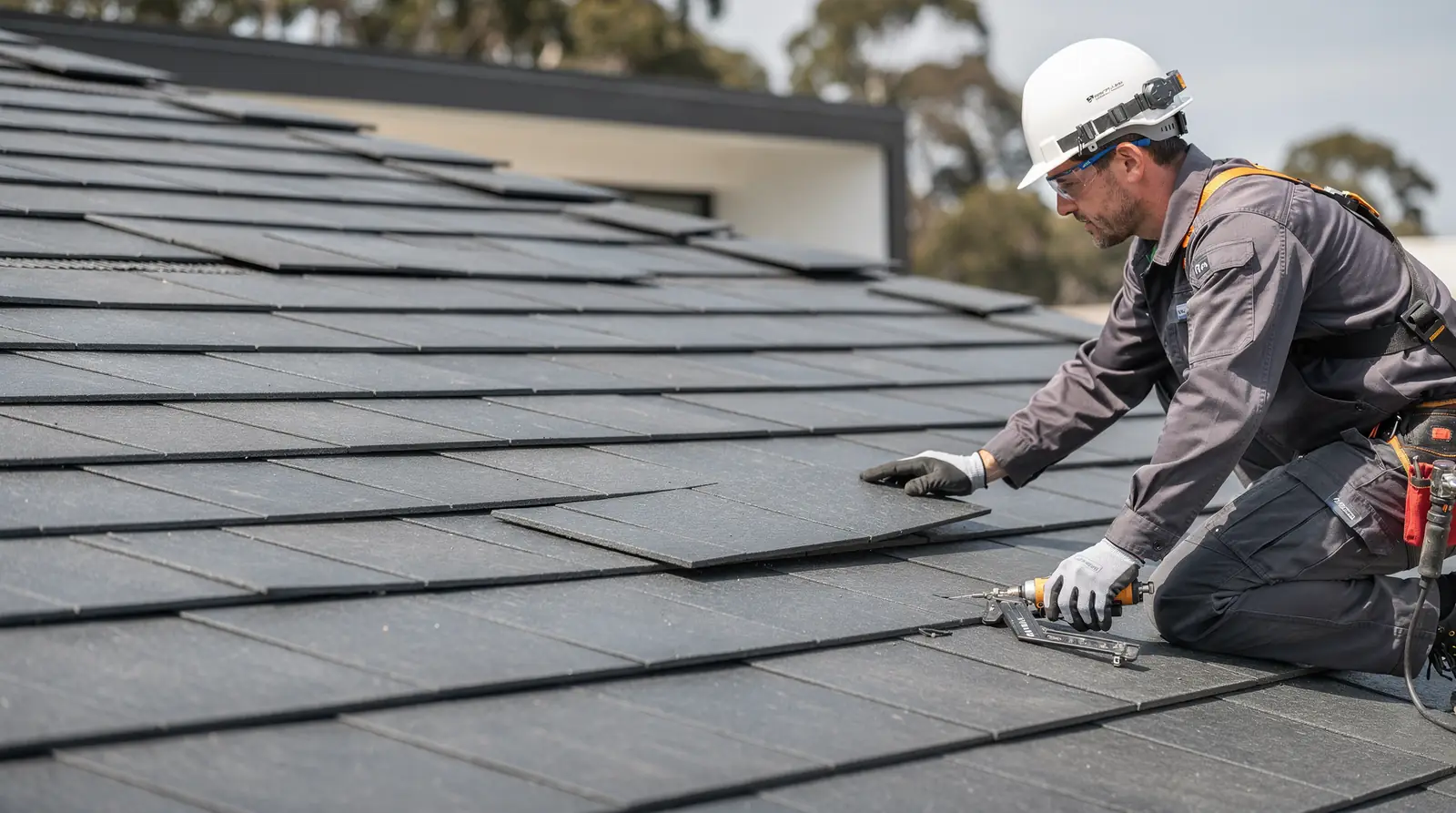
Modern synthetic slate roofing delivers the classic look of natural slate without the extreme weight. DaVinci slate resists impact, cracking, and chipping, unlike natural slate that becomes brittle over time. E. W. Smith Roofing has been among the GTA’s local roofing company options for decades.
What is modern synthetic slate roofing?
Modern synthetic slate roofing is a composite roofing material engineered to replicate the authentic look of natural quarried slate. The material delivers a classic aesthetic without the extreme weight that would require costly structural reinforcement. Homeowners gain the timeless appearance of slate while avoiding the substructure modifications real stone requires.
Synthetic slate shingles combine multiple raw materials into a single high-performance product. Polymers, plastics, clay, cement, rubber, and steel all contribute to the final composition. This blend creates tiles with properties that natural slate cannot match. The result is a roofing material that looks authentic yet performs better under real-world conditions.
How does synthetic slate compare to natural slate in weight?
Natural slate is very heavy. Roof structures must be reinforced before installation can even begin. Synthetic slate is lightweight and resilient. It installs on almost any roof without structural modification. The weight difference alone makes composite slate roof systems accessible to homeowners who would otherwise face prohibitive engineering costs.
What performance ratings do modern synthetic slate tiles carry?
Modern synthetic slate products resist impact, cracking, and chipping over decades of service. Many faux slate shingles achieve Class 4 impact resistance and Class A fire ratings. These ratings make the material suitable for demanding climates where hail, wind, and freeze-thaw cycles punish lesser roofing. Natural slate grows brittle with age and chips or cracks under stress. Synthetic alternatives maintain their integrity year after year.
The material category has matured significantly over the past decade. Early products offered mediocre imitation. Today’s offerings provide a viable, high-performance roofing solution that preserves heritage character without the maintenance burden of real stone. For homeowners evaluating material options suited to the region’s weather patterns, the company’s roofing material guide for Toronto covers lifespan, cost comparisons, and climate-specific performance factors.
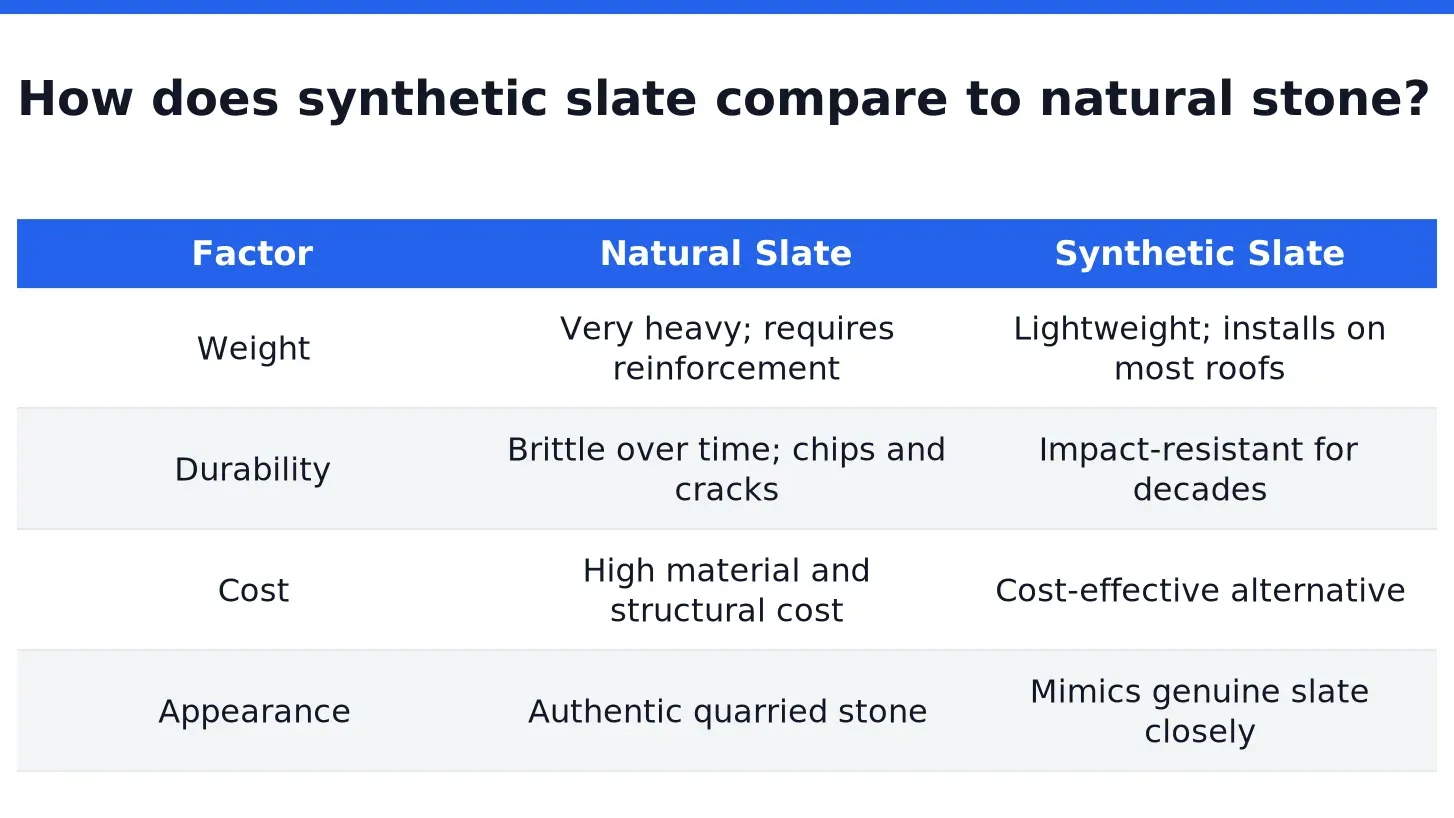
How does synthetic slate compare to natural stone?
Natural stone slate carries a weight penalty that synthetic slate eliminates. A composite slate roof resists decades of impact and cracking while natural stone grows brittle with age. Homeowners in Toronto and across Ontario face a clear trade-off between authentic quarried material and modern engineered performance.
What makes natural slate so heavy and fragile?
Natural slate is very heavy. Roof infrastructure must be reinforced to hold the weight of real slate. Over time, natural slate becomes brittle. It chips and cracks under stress that a composite material shrugs off. Westlake Royal Building Products notes that DaVinci slate resists impact, cracking, and chipping for decades. That durability gap widens with every freeze-thaw cycle Ontario winters deliver.
Why do faux slate shingles cost less to install?
Faux slate shingles skip the structural reinforcement that natural stone demands. Synthetic slate roofing tiles are a cost-effective alternative to natural slate because synthetic slate mimics the appearance and durability of genuine slate. This cost-effective alternative delivers a convincing match to natural slate in both appearance and long-term durability. The lightweight composition installs on almost any roof without added engineering. Heritage home renovators avoid the six-figure structural upgrades that heavy quarried slate requires.
We’re committed to offering the highest quality workmanship and materials for your structure’s most vital feature. Our approach to taking care of our customers is to demonstrate a dedication to superior service and satisfaction. A composite slate roof delivers the timeless aesthetic Ontario luxury property owners want without the structural headaches natural stone creates.
What are the benefits of a composite slate roof?
A composite slate roof delivers the authentic look of quarried stone without the structural headaches. Homeowners gain a lightweight, impact-resistant surface that sidesteps the costly reinforcement natural slate demands.
The weight difference alone transforms project feasibility. Natural slate requires substructure modifications to handle extreme tile weight. A composite alternative eliminates that expense. Installation proceeds on almost any roof without engineering upgrades. This single advantage saves thousands in structural work before the first tile is laid.
Style versatility sets synthetic slate apart from traditional materials. Manufacturers offer a wide range of colors and profiles, including multi-width options that replicate historic patterns. Dark charcoal hues evoke coastal architecture. Variegated gray blends complement both modern and heritage homes. The material matches virtually any architectural style while maintaining consistent color that never fades unevenly.
How does synthetic slate compare to natural slate for weight and durability?
Natural slate becomes brittle over time. Chips and cracks appear after years of freeze-thaw cycles. Synthetic slate resists impact, cracking, and chipping through decades of exposure. The lightweight composition installs without reinforcement. Real slate demands it. For Toronto homeowners facing harsh winters, that durability difference matters.
Can affordable roofing materials still increase property value?
Quality roofing in the GTA increases property values, especially during renovations. Budget-friendly materials like fiberglass deliver long-term savings while maintaining curb appeal. A well-installed roof signals to buyers that the home received proper care. We’re dedicated to service excellence in all that we do for our local residential and commercial clients. The company’s experience informs every installation decision.
Faux slate shingles combine polymers, plastics, and rubber into a resilient composite. This material blend creates tiles that flex under impact rather than fracture. The result is a roof that looks indistinguishable from quarried stone while performing better in real-world conditions. Energy efficiency advantages compound the value proposition over the roof’s lifespan.
Why choose faux slate shingles for Ontario homes?
Faux slate shingles deliver the authentic appearance of natural quarried slate without the structural reinforcement that real stone demands. Ontario homeowners gain a roof that mirrors the elegance of heritage architecture while avoiding the weight burden that makes authentic slate impractical for many existing structures. The material replicates slate’s texture and color variations so convincingly that distinguishing it from genuine stone requires close inspection.
How do faux slate shingles compare to natural slate?
Natural slate weighs approximately 800 to 1,500 pounds per square foot, necessitating costly structural upgrades before installation. Faux slate shingles weigh a fraction of that amount. The roof serves as the first line of defense against the elements, protecting the structure and the people and property inside. A lightweight composite slate roof installs on standard framing, eliminating the engineering expense that often derails heritage renovation budgets.
What makes synthetic slate suitable for Toronto’s climate?
Freeze-thaw cycles punish roofing materials across Ontario winters. Natural slate absorbs moisture and becomes brittle over time, leading to chips and cracks that demand costly repairs. Synthetic slate resists moisture absorption and withstands temperature swings without degrading. E. W. Smith Roofing has maintained a solid reputation, serving local communities with dedication. That longevity reflects an understanding of which materials endure Ontario’s weather extremes.
What factors should homeowners weigh before choosing faux slate?
Cost, durability, and projected lifespan rank among the critical considerations for any roofing investment. Faux slate shingles carry a higher upfront price than asphalt but deliver decades of service with minimal maintenance requirements. The material’s impact resistance prevents the cracking that plagues natural stone, while its color stability resists fading under ultraviolet exposure. Homeowners evaluating roofing options balance these performance characteristics against budget constraints to determine whether the long-term value justifies the initial expenditure.
Conclusion
For Toronto homeowners weighing roofing options, synthetic slate delivers the heritage look without the structural burden of natural stone. This material withstands Ontario’s freeze-thaw cycles while eliminating costly reinforcement. The decision comes down to balancing upfront investment against decades of reliable performance. Choose the roof that protects your home without compromising your budget.
Key Takeaways
-
Synthetic slate replicates the look of natural quarried slate without the extreme weight, so it installs on most roofs without costly structural reinforcement
-
Many synthetic slate products achieve Class 4 impact resistance and Class A fire ratings, resisting the cracking and chipping that affects natural slate over time
-
Natural slate weighs 800-1,500 lbs and demands structural upgrades; synthetic slate weighs a fraction of that
-
Synthetic slate withstands Ontario’s freeze-thaw cycles and resists moisture absorption, making it well-suited to Toronto’s climate
-
Manufacturers offer a wide range of colors and profiles, so synthetic slate can match both heritage and modern architectural styles
Frequently Asked Questions
Q. What is the main difference between synthetic slate and natural slate roofing?
Natural slate weighs approximately 800-1,500 lbs and requires costly structural reinforcement before installation. Synthetic slate replicates the look of quarried stone at a fraction of that weight, installs on standard framing, and resists impact, cracking, and chipping better than natural slate, which grows brittle over time.
Q. How long does synthetic slate roofing last?
Synthetic slate is engineered for decades of service. Many products carry Class 4 impact resistance and Class A fire ratings, and the material resists moisture absorption and temperature swings, so it holds up well through Ontario’s freeze-thaw winters without the chipping and cracking that affects aging natural slate.
Yes. Synthetic slate suits Toronto’s climate and heritage architecture particularly well because it withstands freeze-thaw cycles, skips the structural upgrades natural slate demands, and comes in colors and profiles that match historic and modern homes alike, making it a practical option for heritage renovations and luxury properties.